Parque das Artes Masterplan
UX Strategy, UX Research & Service Design

Villa-Lobos and Cândido Portinari are two major public parks in São Paulo, serving different audiences and routines: people practicing sports, families spending time together, visitors attending events, friends meeting outdoors and people looking for a break from the city.
Villa-Lobos and Cândido Portinari were part of a broader masterplan ambition: to turn the park complex into a more iconic destination in São Paulo.
The challenge was not only to improve the visitor experience, but to rethink how the parks could generate more value through programming, services, partnerships and better orientation without losing their role as public, democratic and accessible spaces.
Parque Villa Lobos & Cândido Portinari
My contribution as a Designer focused on the Discovery phase, helping the team understand visitor behavior, operational constraints and strategic opportunities that could inform the masterplan.
We started the Discovery by reviewing available data from the São Paulo State Government to understand the current park experience and identify initial tensions around visitor behavior, spending and motivation.
The data was used to frame the research questions and guide the qualitative investigation.
From there, we combined benchmark analysis with interviews across three perspectives:
Visits were behavior-led, not commerce-led
People came to the park with specific intentions: sports, leisure, pets, events, friends, rest or learning. Spending was rarely the reason for visiting.
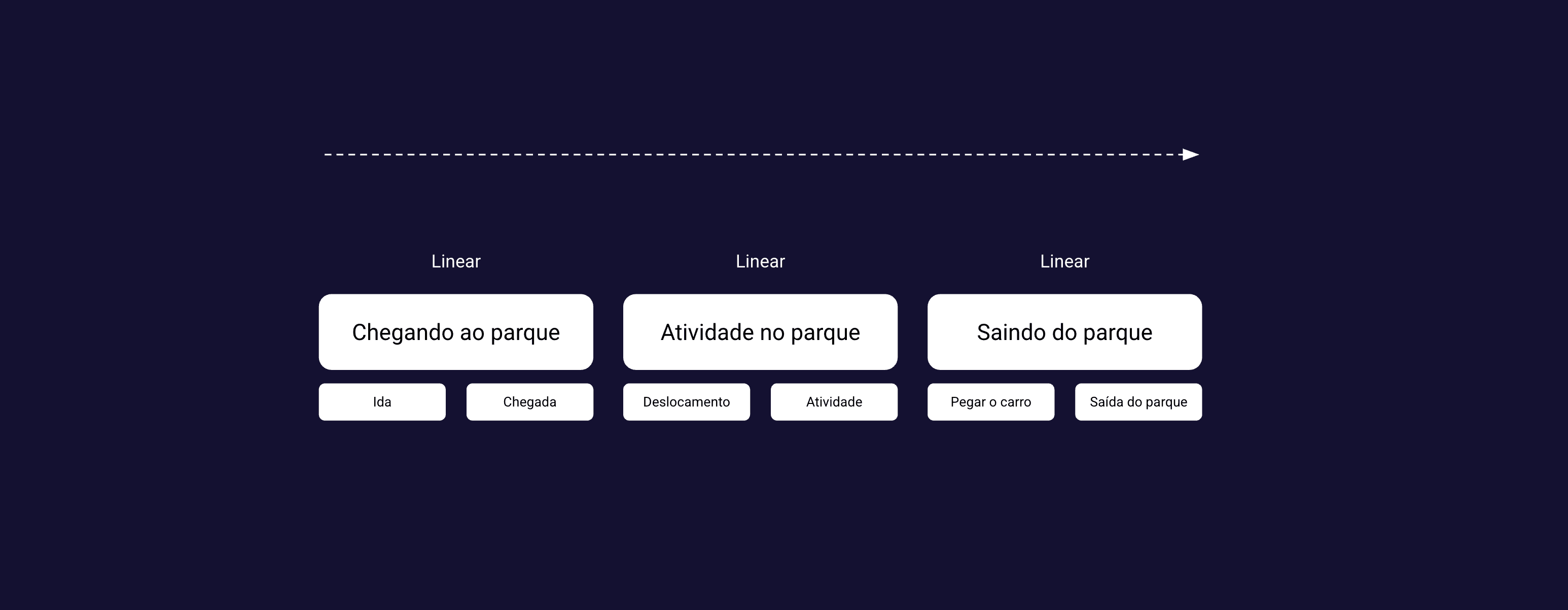
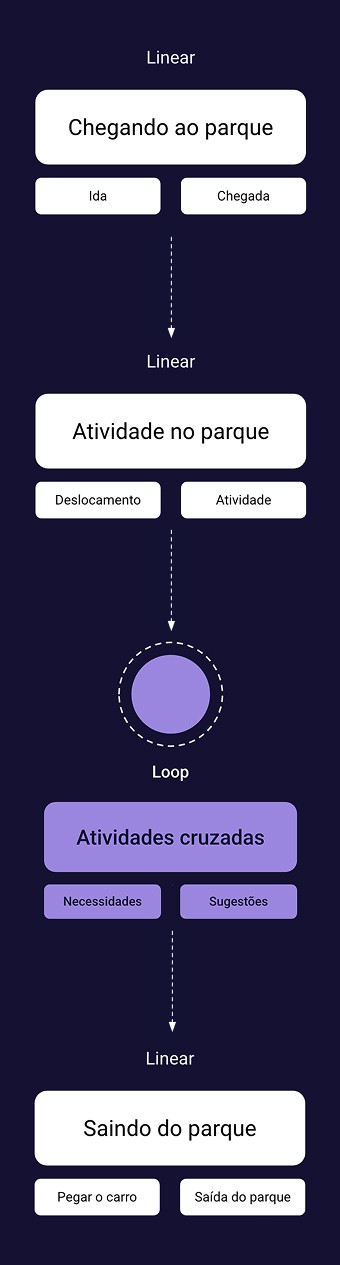
The journey was mostly linear
Visitors usually arrived, completed one activity and left. The experience offered few natural bridges between activities.
Consumption needed to be contextual
People were not going to the park to shop, but food, drinks and basic services became relevant when connected to the right moment in the journey.
The park needed behavioral territories
Different audiences used the park in different ways. This pointed to the need for areas and experiences organized around behaviors, not just physical spaces.
Operational issues were experience issues
Access, safety, signage, shade and service availability directly shaped how people moved, stayed and engaged with the park.
Brands needed to add value, not interrupt
The best sponsorship opportunities were those connected to existing visitor behaviors, such as sports, food, culture and family activities.
The strategy was to shift the park from a place people pass through for isolated activities into a platform for connected experiences.
Instead of thinking only in terms of locations, we reframed the park around behaviors, journeys and complementary activities.
The strategic shift was:
This informed four strategic directions:
One of the main outputs was a shift in the visitor journey model.
The current experience was mostly linear:
The Discovery informed the broader masterplan and was fully approved by stakeholders.
Its main contribution was to translate visitor behavior, operational constraints and business goals into a clearer experience strategy for the parks. Instead of treating monetization as isolated commercial touchpoints, the work helped frame value creation around behaviors, journeys and contextual partnerships.
The research inputs supported decisions across the masterplan, including behavioral profiles, cross-journey opportunities, sponsorship territories, zoning logic and wayfinding principles.
Although the restructuring was later paused due to administrative reasons, the project created a shared strategic foundation for future implementation: a more connected, navigable and sustainable park experience that preserved the public nature of the space
This project reinforced that UX is not limited to digital interfaces. In this case, the “interface” was the park itself: its paths, access points, services, signage, events, rhythms and operational constraints.
It also made clear that monetization in a public space cannot be treated as an add-on. It needs to be embedded in the journey, connected to real behaviors and respectful of the context.
Since the project was paused before implementation, I would define success metrics earlier in the process to help evaluate the impact of the proposed strategy in future phases.
Visitor experience
Dwell time, recurrence, satisfaction and ease of orientation.
Social impact
Participation across different visitor profiles, diversity of activities and engagement with cultural, educational and community programming.
Operational sustainability
Average ticket, partner revenue, service usage and performance across weekdays, weekends and events.